International Shotokan Karate Federation of India

History of Shotokan Karate
A brief history of Karate, its Okinawan roots, the development of Shotokan and the journey of Master Gichin Funakoshi and his successors.
A Brief History of Karate
松濤館 Shotokan
Shotokan-style Karate was developed by Master Gichin Funakoshi. The Martial Art Shotokan Karate has a long and rich history dating back to the 18th century. It was formalized as a school in 1939 by Gichin Funakoshi based on Okinawan Karate, its Shotokai and Shotokan Masters having shared this significant art throughout the world.Okinawan Karate
Two kinds of styles found their way to Okinawa, and had their influence on Okinawa's own original fighting method, called Okinawa-te (Okinawan hand) or simply te. A ban on weapons in Okinawa for too long periods in its history is also partly responsible for the high degree of development of unarmed fighting techniques on the island.
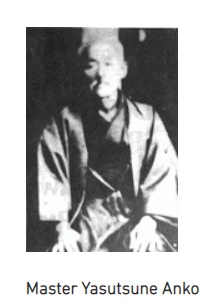
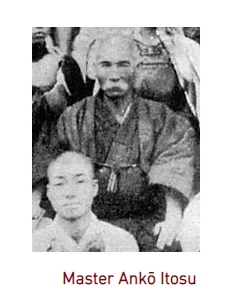
Karate in Okinawa developed from the synthesis of two fighting techniques. The first one, used by the inhabitants of Okinawa, was very simple but terribly effective and, above all, very close to reality since it was used throughout many centuries in real combat.
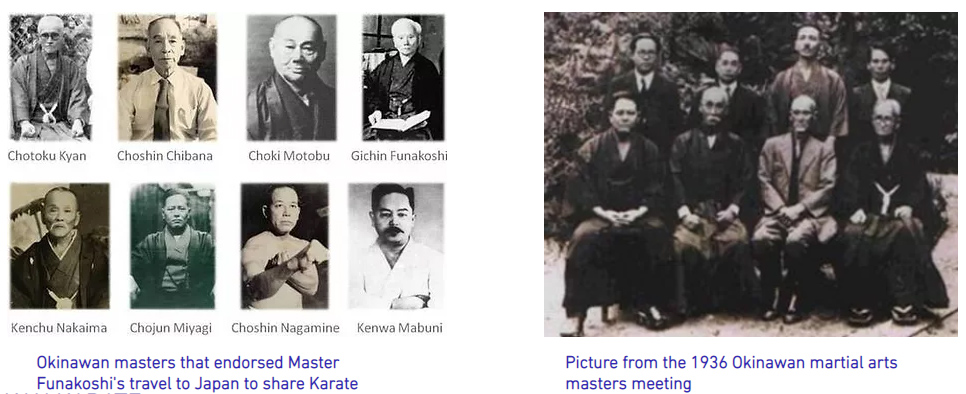
The Okinawans combined Chinese martial arts with the
existing local variants to form Tode. The Okinawan
characters for Tode were later translated in Japanese
as Karate.
Shotokan Karate
Karate in Okinawa continued to grow and garner interest, but was solely Okinawan. In an effort to expand the reach of Karate, Master Funakoshi ventured to mainland Japan in 1922 to promote its practice.
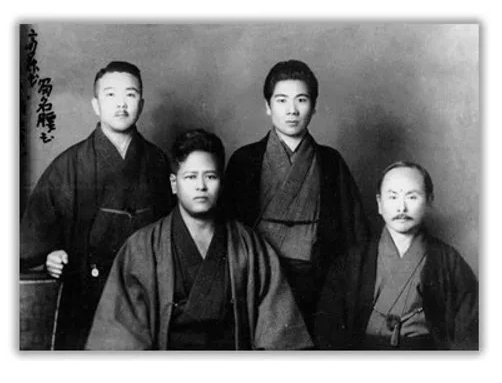
Master Funakoshi, Yoshitaka Funakoshi, Shigeru Egami, and Takeshi Shimoda traveled throughout mainland Japan staging exhibitions, trying to expand the knowledge of Karate-do as a Japanese martial art.
They organized and established a school or Dojo that his senior students later associated with teachings under his pen name Shoto.
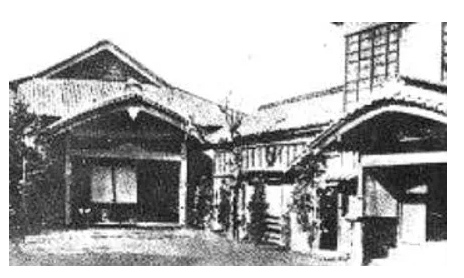
The first Shotokan was completed in 1936. Master Funakoshi was 70 years old.
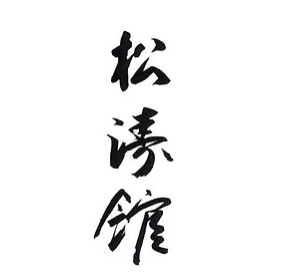
Shotokan in Japanese calligraphy representing the school that Master Funakoshi had founded.
Master Funakoshi, Yoshitaka Funakoshi, Shigeru Egami and Takeshi Shimoda, and other senior students continued to adapt and meld Shotokan Karate with Japanese Martial Arts and Philosophy.
Japanese Shotokan Karate
Master Funakoshi and his senior students continued to develop Shotokan Karate and adapted its practice to the Japanese martial arts environment. His teachings and philosophy helped establish the foundation of modern Shotokan Karate.
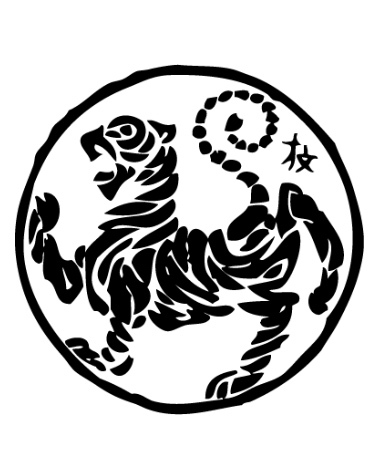
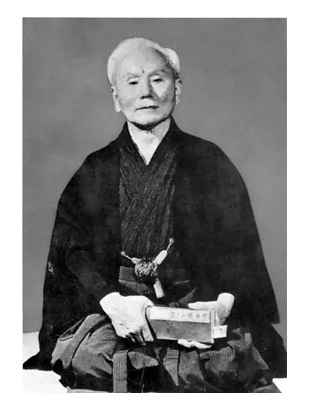
Master Funakoshi became increasingly busy with Shotokan dojo and writing Kyohan. He began handing over his teaching assignments at the various universities to his students.
The Pacific War started in 1941, and times grew hard in Japan. Master Funakoshi's third son, Gigo, who was supposed to inherit his father's school, died of tuberculosis in 1945.
After the war, Master Funakoshi's dojo was destroyed by Allied bombers. In later years, he continued teaching, giving demonstrations and helping to preserve the art.
Master Funakoshi continued teaching and promoting Karate until his death in 1957. His philosophy, teaching methods and principles became the foundation for generations of Shotokan practitioners.
Modern Shotokan Karate
Upon bringing Karate to Japan and seeing its traditional martial arts, such as judo and kendo, Master Funakoshi patterned Karate after these arts to a large degree and made Karate popular.
He held many conversations with fellow Masters including Jigoro Kano, the founder of Judo and Morihei Ueshiba founder of Aikido. Once again he evolved and combined his Karate techniques by applying his philosophy.
As with so many things in life, adaptation and evolution are natural. Shotokan-Ryu Karate is no exception. The influence of people, environment, technology and other social aspects of life affect its propagation.
The principles and basics of Master Funakoshi's Karate are not identical to the techniques later developed within different organizations. Today, students continue to explore and develop the art while respecting the traditional principles of Shotokan Karate.
Budo Karate
Budo Karate emerged after World War II as a movement away from the anachronistic ways of the Samurai and Bushido. Martial artists sought a higher level of sophistication and attainment long before the rigid organizational structure of modern martial arts.
Sometimes finding the depth that came from years prior to the war, and often in combination with the current knowledge of the body and mind, the Budo way is life-long pursuit of self perfection as a fusion of body, mind and spirit.
The Spirit of Shotokan
Karate is more than a physical discipline. Its continuing development reflects the pursuit of knowledge, discipline, character and self-perfection through the martial arts.