
Seek Perfection of Character
Jinkaku kansei ni tsutomuru kotoSeek perfection of character and continually improve yourself through training, learning and personal growth.
International Shotokan Karate Federation of India
The principles and etiquette that guide every practitioner of traditional Shotokan Karate.
Everyone who trains in karate must know the dojo kun. At the end of each training session—whether it be at the dojo, after class, or after a tournament, which I always call “special training”—the dojo kun is repeated all together by the students as a reminder of why we train.
The dojo kun states the basic philosophy of karate, according to its founder and my teacher, Master Gichin Funakoshi. Master Funakoshi believed that, for the true karate-ka, the dojo kun should not only be considered a set of rules of conduct in the dojo, but a guide to everyday life.
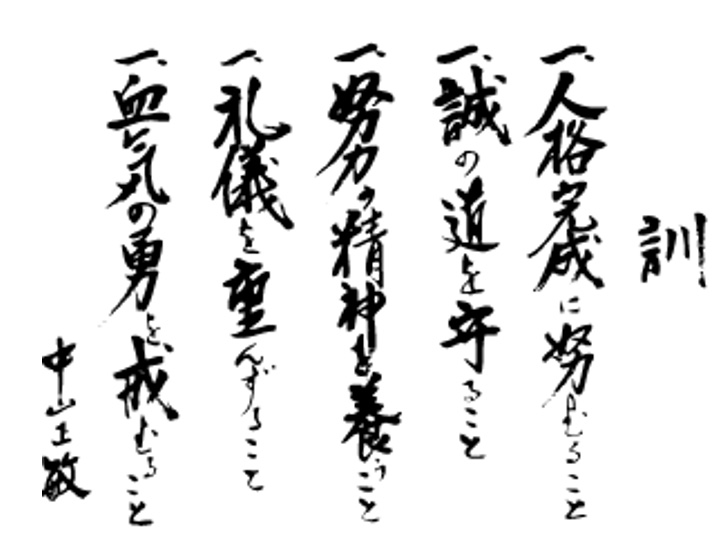
The Dojo Kun provides a foundation for the behaviour, attitude and personal development of a karateka both inside and outside the dojo.
Seek perfection of character and continually improve yourself through training, learning and personal growth.
Be sincere in everything you do. Make a total effort and remain true to yourself and others.
Try hard at everything you do and give your best effort in training, work and relationships.
Show respect and humility toward others. Treat everyone with courtesy and consideration.
Refrain from Violent Behavior
Keki no yu o imashimuru koto
Control yourself at all times and avoid unnecessary
conflict. A martial artist should remain calm,
controlled and peaceful, using Karate techniques
only when truly necessary for self-defence.
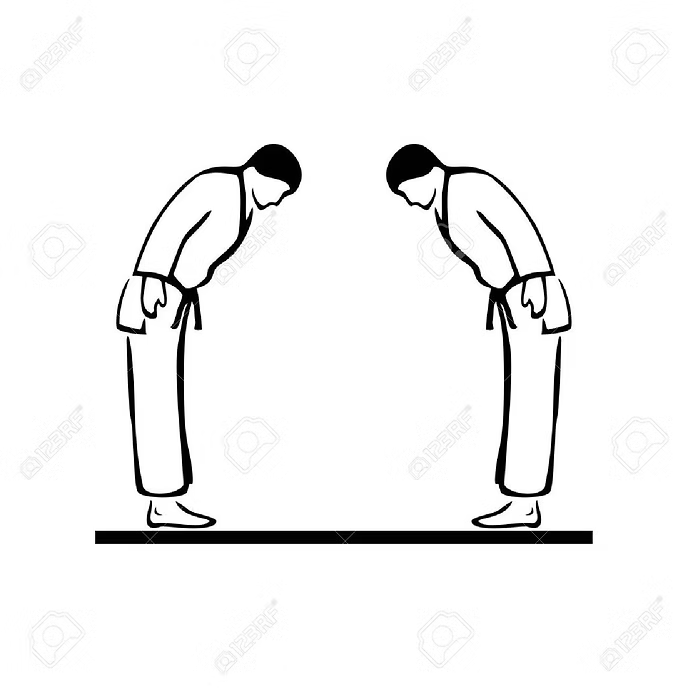
Karate is dangerous, so proper observance of etiquette is as important to our training as learning the physical techniques of Karate.
Please follow the etiquette below at all dojos:
The Dojo Kun is not merely a set of rules to be recited. It represents the principles that a karateka strives to carry from the dojo into everyday life.